
IS WRITING A SUBSTACK ACTUALLY HARD?
It depends on the context.

The other day I was talking to a fellow Substacker, and we landed on a reflection that stuck with me: writing a newsletter is pretty close to a therapy exercise. Beyond the egotistic satisfaction of making people understand what’s on your mind, anyone who has gone to therapy can relate to the feeling. Some sessions you walk in ready to talk ideas lined up, things to unpack. Other sessions you sit there in complete blank. Minutes pass. You try to ignite the engine, reach for something to elaborate on, and nothing comes. You’re blocked.
Writing a newsletter is exactly the same. You can build a methodology, a list of topics, and a set of sources. Sometimes it flows seamlessly. Sometimes none of that is enough. When that happens, and you’re bold enough to write something on autopilot, your audience notices. That’s the real challenge. It always comes back to consistency and constancy, and what gives you the fuel for both of those is purpose.
This week I spent a significant amount of time thinking and planning how to scale my distribution strategy. I found awesome tools, which gave me insane ideas, which got me interested in researching, which made me want to build cool products to ship.
What blew my mind, again, like last week. Is how easy it has become to put your ideas in someone else’s hands. I ended up with a stack full of ideas to enhance this newsletter’s value proposition, and every single one of them depends on network effects and scale, which means: a wider audience. Self-publishing and self-distributing is the future. The creator economy didn’t arrive to show us a new revenue stream, it arrived to show us that in the future, everyone will own their distribution channel. AI made that thesis even stronger: in the AI era, you can build your own operating system and run it on a $20/month license. This, at least, is the modern American Dream.
THE CREATOR ECONOMY: TWO KINDS OF AI ADOPTION
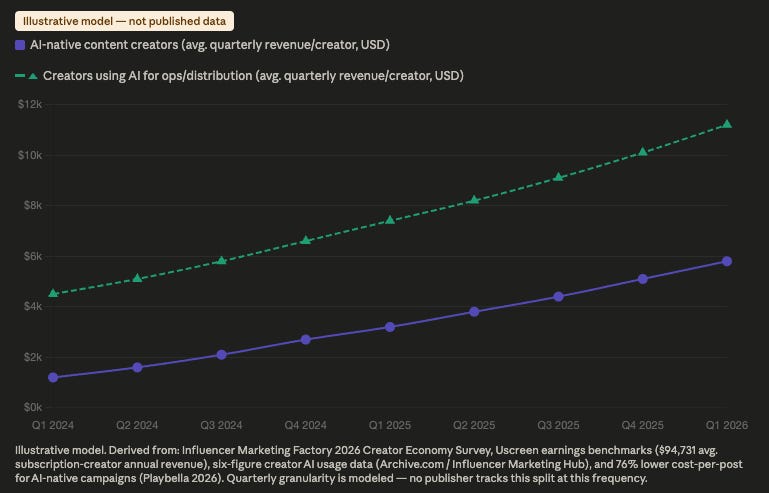
The creator economy has been growing fast for years, but AI has introduced a meaningful distinction worth tracking: creators who use AI as their primary content engine versus creators who use AI for distribution, operations, and workflow.
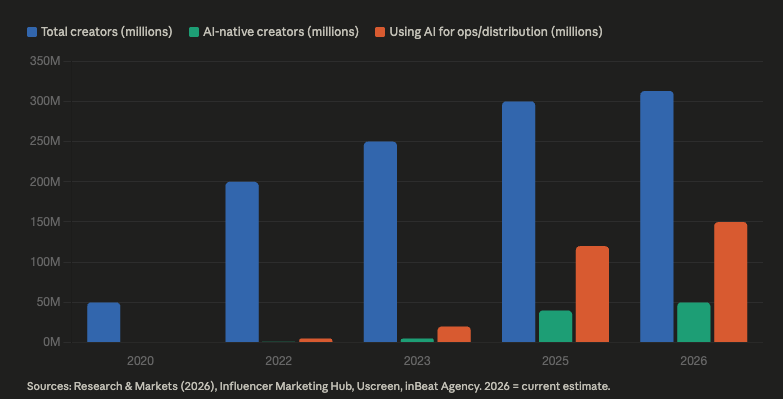
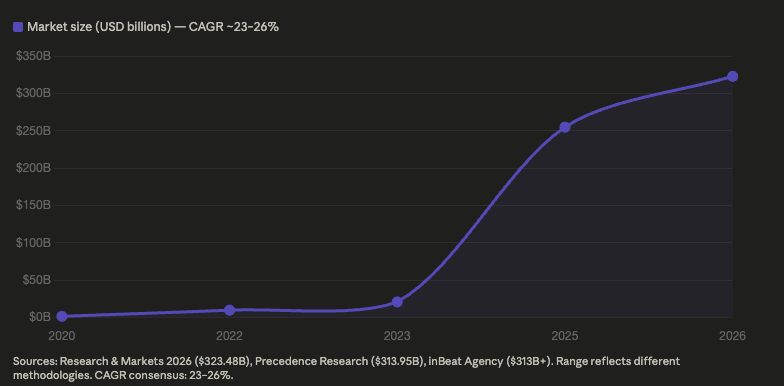
The interesting tension: AI-native creators can produce volume, but creators using AI for operations, like distribution, SEO, audience analytics, are the ones compounding their reach without sacrificing the craft in the content itself. The tool doesn’t replace the voice. It amplifies the infrastructure around it.
This are the tools and Use case I am building for automating the distribution of this space.
Higgsfield + Manus for Substack SEO/AEO Automation:
Say you publish a piece on this newsletter about AI and the creator economy (meta, I know). A Manus agent reads the published post, extracts the core topics and semantic clusters, then drafts a set of SEO-optimized meta descriptions, social captions, and keyword tags calibrated to your audience. Higgsfield takes the key visual concept from the piece and generates a short-form video clip for distribution on Shorts, TikTok or Reels, with no editing required. The whole pipeline runs post-publish, automatically. You wrote the piece. The tools handled the reach. That’s the split worth understanding. For me, I know how to write, I know the fundamentals of SEO but I am sure I am not likely to spend an afternoon in the Google and META Tag managers. These tools are like a dream come true.
CRAFT vs. ART vs. HOBBY
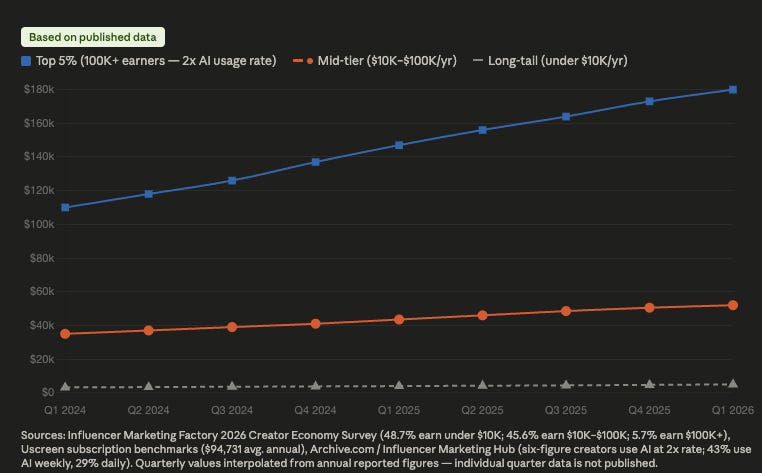
So why is creating something still hard if the entire operation can be handled with $100 in monthly licenses?
Because creating is a craft. And craft, by definition, is a human activity that requires technical knowledge and dexterity to produce something tangible or functional. You can automate the distribution. You cannot automate the judgment.
Let’s be clear about the distinctions:
- Art: Emphasizes purely personal, unanalyzable creative power and emotional expression. You feel it or you don’t.
- Craft: Emphasizes structural mastery, deliberate technique, and results in something with functional purpose. You practice it.
- Hobby: A leisure activity done in one’s spare time for personal enjoyment, regardless of skill level. No stakes required.
I’m glad to say that building this space, at least in my mind, involves all three. As I mentioned a few weeks ago, this newsletter started as a professional discipline tool. Once I had a full-time job, I kept writing it anyway, because I genuinely enjoyed it. I’ve crafted it through two ecosystems that shaped the way I think. And in the end, writing is a form of expression, which makes it art.
The $100 in licenses handles none of that.